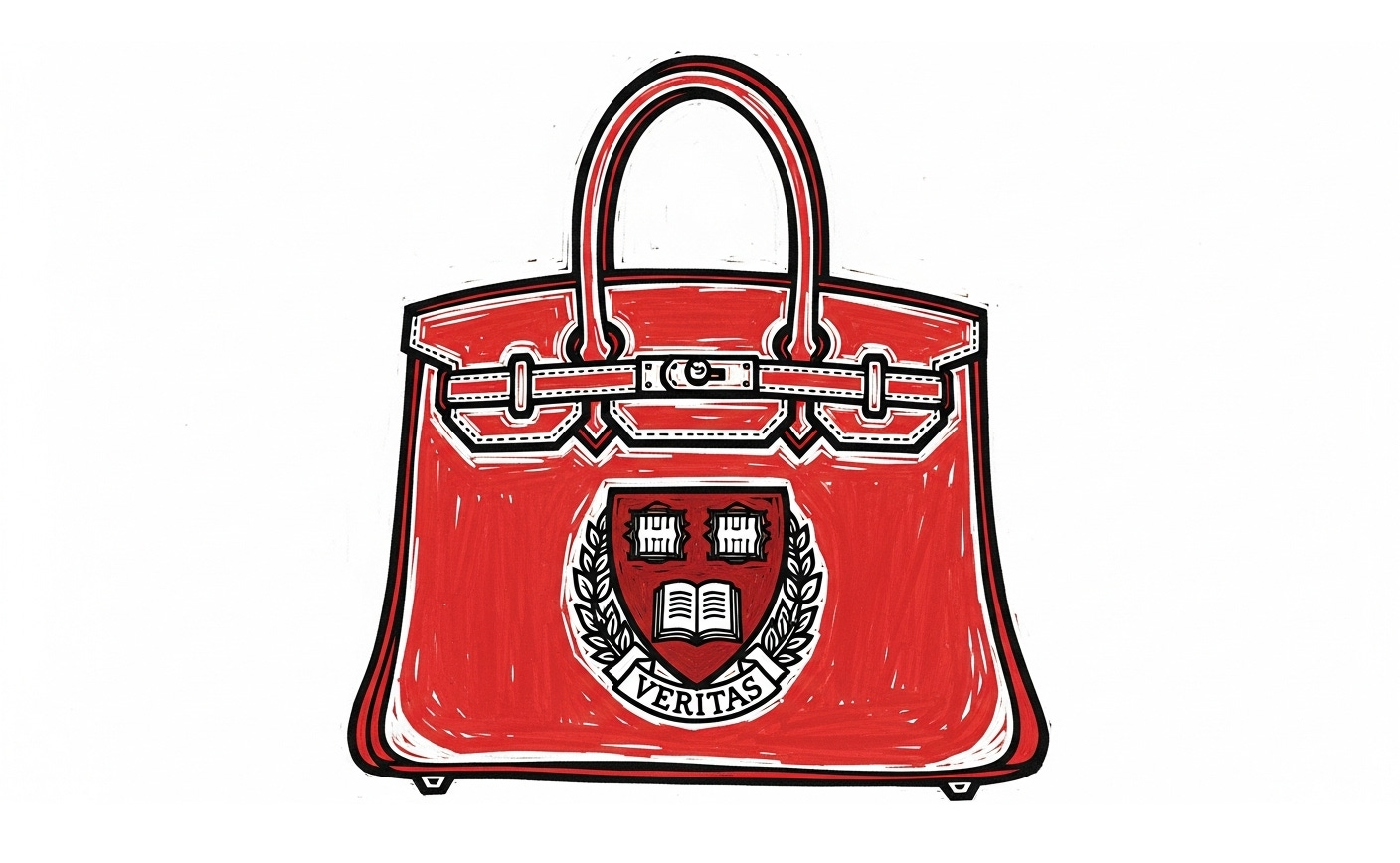
The Matthew Effect: Why a Harvard Degree Works Like a Birkin Bag
“For to everyone who has, more will be given.” — Matthew 25:29
When Pierre Azoulay analysed citation patterns among life scientists in 2014, he discovered something peculiar [1]. Papers by newly minted Howard Hughes Medical Institute investigators saw their citations jump by 12% overnight - not because the research improved, but because the letterhead changed. More tellingly, the boost nearly doubled for work published in lower-tier journals, where quality signals were murkiest. The finding vindicated a hypothesis sociologist Robert Merton had floated four decades ago [2]: in domains clouded by uncertainty, prestige doesn’t just predict success, it manufactures it.
This is the Matthew Effect in its purest form, named for the Gospel passage where “to those who have, more will be given.” Yet Merton’s 1968 essay in Science, and his richer 1988 follow-up in Isis [3], revealed something more profound than biblical coincidence. The Matthew Effect isn’t a bug in meritocracy’s code; it’s the operating system. And status branding (i.e. the deliberate cultivation of prestige as identity capital) is the mechanism that keeps the gears turning, converting minor early advantages into self-reinforcing dominance with the efficiency of compound interest.
The Catalyst: When Affiliation Becomes Achievement
Consider two lawyers, equally talented, graduating in the same cohort. One carries a Harvard credential; the other, a respectable regional university. By age 35, the Harvard alumnus will likely out-earn her peer by 30%, not because she litigates better cases, but because clients and partners encode her institutional affiliation as a proxy for competence [4]. A fundamental substitution has taken place: her worth is no longer assessed by examining her own capabilities, but rather by invoking the prestige of the institution that credentialed her. Her value is defined through identity and affiliation rather than intrinsic merit.
This is status branding as catalyst. Like a chemical reaction requiring an initial spark, cumulative advantage needs a starting asymmetry. Merton termed it an “institutional location” [3]. Top departments accelerate recognition, while elite schools open boardrooms. The mechanism is behavioural. Audiences, facing Knightian uncertainty about quality, resort to prestige hierarchies as cognitive shortcuts [5]. We cannot assess the lawyer’s true skill, so we default to the halo of her alma mater, much as 19th-century consumers judged craftsmanship by guild marks rather than tactile inspection.
The process compounds in a self-amplifying loop. [3]. Brands like Ferrari and Apple have mastered this. By limiting production and controlling supply, they ensure each product becomes a symbol of prestige and extraordinary craftsmanship, transforming ordinary items into coveted treasures through perceived scarcity [4]. Owning a Birkin bag or Harvard MBA confers status merely by association, initiating what Merton observed in science. Early fame speeds idea diffusion via citations, now scaled across consumer capitalism. The credential becomes the product; the product, a status symbol; the symbol, a self-fulfilling prophecy.
The Shortcut: Uncertainty as Amplifier
Why does this work so reliably? Because quality, in most domains, is illegible. Merton called this the “Other Uncertainty Principle”: absent direct evidence of merit, we triangulate via prestige. Venture capitalists cannot predict which startup will succeed, so they favour Y Combinator alumni. Publishers cannot guarantee bestsellers, so they overpay authors with Penguin Random House pedigrees. Art collectors cannot objectively rank contemporary painters, so they defer to Sotheby’s provenance [4].
Azoulay’s team found this amplification effect most pronounced when uncertainty about quality was highest. Publishing in lower-profile journals or exploring novel research areas provided more reason to doubt the science before the prize [1]. Status serves as social proof under fog, much as Cialdini described in Influence [6]. When unsure, we copy the crowd, or, more precisely, we copy whoever the crowd has already crowned. The citation premium for high-status scientists isn’t modest. It’s a structural phenomenon, embedded in how knowledge diffuses through networks where fame begets fame in a self-accelerating cycle[3].
The digital economy has supercharged this dynamic. Platforms reduce complex relationships to visual displays of quantity (i.e. followers, likes, citations). These displays serve as currency, often enshrining the Matthew Effect in their code base by algorithmically pushing content that is already gaining momentum [7]. Google Scholar’s ranking algorithm, critics note, weights citation counts heavily, ensuring highly cited papers appear in top positions and gain ever more citations, while new work struggles to surface. LinkedIn’s verification badges and Instagram’s blue ticks are prestige capture in microcosm. The algorithms reward the already-visible, turning personal branding into a digital Matthew trap [4].
The Flywheel: Self-Fulfilling Prophecy of Prestige
Once triggered, the Matthew Effect becomes circular. A product is deemed meritorious because it carries the logo of an anointed producer. The producer gains higher status for making such a “good product” [4]. This is not cynicism but economic rationality under incomplete information. Prestige pricing strategies rest on the belief that certain customer segments will pay more. To earn this premium, brands build narratives around legacy and unique value. They showcase exceptional quality through refined design and superior craftsmanship, and they build exclusivity through limited availability and scarcity.
Hermès exemplifies this alchemy [8], [9]. The Birkin bag’s mystique rests less on its exquisite leather than on its controlled scarcity and celebrity associations. From 1980 to 2015, Birkins appreciated at approximately 14% compound annual growth rate, outperforming fine jewelry and even the S&P 500 [9]. Hermès doesn’t just make handbags; it curates an experience of aspiration through invitation-only sales systems and waiting lists spanning over six years [9]. Buyers aren’t purchasing utility; they’re acquiring membership in a status hierarchy [4], much as Harvard’s endowment snowballs not from investment genius alone but from the reputational compounding of alumni networks. The credential or product becomes symbolic property, asserting dominance in a zero-sum game for recognition.
Merton anticipated this in his analysis of intellectual property [3]. Scientists exchange knowledge freely for “reputational pellets” (i.e. citations) that aggregate into career capital. But this communism of ideas, meant to accelerate progress, breeds inequality. Priority disputes arise because credit is finite. Newton’s “standing on ye shoulders of Giants” was less an act of homage than a claim of intellectual property. In consumer markets, the same logic plays out. Brands don’t compete on quality alone but on the symbolic weight of their names, converting belief into outcome through feedback loops that solidify top dominance.
The Inequality Machine
The consequences are stark. Measures of academic success follow extremely right-skewed distributions. A minority of all academics produce the most research output and attract the most citations, with a 2018 study of science funding in the Netherlands finding that winners just above the funding threshold accumulated more than twice as much funding during the subsequent eight years as non-winners. Merton documented this in 1988 [3]: 28% of US federal research funds flowed to just 10 universities; 0.3% of articles garnered over 100 citations while 58% limped along with one.
DiPrete and Eirich’s 2006 review in Annual Review of Sociology [10] framed this as a mechanism for inequality, not just an outcome. Status branding initiates the process. The funding, collaborators and publication slots concentrate among the anointed. The gaps widen longitudinally. Eminent scientists accrue larger increments of peer recognition for equivalent contributions, not because they work harder but because their reputations insulate them from scrutiny and amplify their visibility [3]. This is the Reverse Matthew Effect: high status protects against negatives. When retractions occur, Azoulay found [1], less eminent coauthors suffer greater reputational damage. Blame deflects upward to prestige, downward to obscurity.
The result is talent wastage. Merton worried about late bloomers. These “mutants” were found to drop out from elite milieus due to a preference for early bloomers [3]. Stanovich’s 1986 work on reading literacy found similar patterns [11]: early status gaps in primary school compound lifelong, disadvantaging children who bloom later cognitively. Social class exacerbates this. Privileged late bloomers persist via networks; working-class prodigies drop out when initial advantages fade. The Matthew Effect, left unchecked, doesn’t just reward merit unequally. It obscures merit entirely, mistaking pedigree for performance [4].
The AI Acceleration
As artificial intelligence (AI) floods information markets, status heuristics grow more potent, not less. Faced with abundance, humans double down on reputation scarcity. We cannot parse a million research papers, so we defer to Nature’s anointing. We cannot vet a thousand fintech startups, so we follow Sequoia’s portfolio. AI was supposed to democratise access. Instead, it has amplified the halo of anointed creators. OpenAI’s early backers enjoy disproportionate valuations not from superior products but from association with the buzziest brand in tech. The algorithm, supposedly neutral, encodes yesterday’s prestige into tomorrow’s opportunities [4].
This phenomenon has birthed masstige marketing [12], [13]. Masstige targets the middle class by combining luxury brand values with mass-market access, promising consumers superior experience, engagement, and status through expensive or premium products marketed to many. Apple captured 46% of global smartphone revenue in 2024 while holding just 19% of market share [14] — prestige pricing at planetary scale. Nike’s Air Jordans function as collectibles, their value inflating through timed releases and artificial scarcity. These aren’t products; they’re status signalling devices, repackaging exclusivity for mass consumption [13].
The danger is expropriation without credit - Merton’s nightmare scenario [3]. When ideas circulate freely but attribution collapses under algorithmic curation, late-stage creators reap rewards while originators languish in obscurity. LinkedIn’s blue-tick economy exemplifies this: verified influencers amplify each other’s content, creating closed loops of visibility while unverified voices shout into the void. The prestige economy becomes a zero-sum tournament where network effects entrench incumbents, and new entrants need exponentially more talent to break through [4].
The Randomness Solution: Betting on Unknowns
Can we escape this trap? The conventional answer of diversity initiatives, blind review, and credential-obscuring misses the deeper problem. These interventions still optimise for past performance, retrofitting yesterday’s patterns onto tomorrow’s talent. They’re actuarial thinking dressed in progressive language, measuring historical correlations and rebalancing portfolios of known quantities [4].
Clayton Christensen grasped the core dilemma [15]. When managers wait until data is clear, the game is over. Actuarial models excel at pricing existing risks (e.g. mortality tables, credit defaults, insurance claims) but catastrophically fail at predicting disruption. They look backward from the iceberg’s impact, calculating damage with precision, then steer straight into it. The future belongs not to those who optimise for the known past, but to those who inject sufficient randomness into selection processes. Merton called them the “countervailing forces” against cumulative advantage [3].
This requires magnanimity toward failure, a tolerance for backing unknowns. Funding lotteries, as practiced by New Zealand’s Health Research Council and increasingly advocated by scientists can randomise early advantages. They’re not meritocratic in the credentialist sense; they’re anti-Matthean. By selecting proposals that clear a quality threshold assisted by a lottery process, rather than expert ranking, they eliminate the institutional halo. Failure becomes permissible, even necessary, because the system no longer pretends omniscience about potential [4].
Contrast this with planned diversity hires, which often backfire by encoding new status markers. Hiring for “diverse backgrounds” while demanding Ivy League credentials simply reshuffles prestige hierarchies without disrupting them. True disruption means choosing candidates with no legible pedigree, no traceable prestige DNA. These may include immigrants from unranked institutions, late bloomers without publications, autodidacts without portfolios. It means betting on potential futures rather than auditing actuarial pasts [15].
The iceberg metaphor applies here too. Organisations fixated on visible credentials (i.e., the proverbial tip above water) miss the submerged mass of latent talent. Merton’s late bloomers [2] attrite precisely because systems optimise for early-stage visibility. But early achievement is often privilege: access to resources, networks, and institutional location that accelerate recognition. The child who publishes at 22 had advantages the night-shift worker studying at 32 did not. Randomness corrects for this by refusing to privilege legibility itself[4].
The Prestige Paradox
Status branding is both currency and cage. For the rich, it’s protective, insulating against failure. For the rest, it’s punitive, deflecting blame downward. Merton likened science’s free exchange of knowledge to an uncommon good. It grows through use rather than depleting like pastures [3]. But this good, secured by symbolic property, breeds inequality as surely as enclosures did. The Matthew Effect isn’t a moral failing; it’s an emergent property of how humans navigate uncertainty under resource constraints [4].
We cannot abolish prestige. Reputational hierarchies are cognitive necessities in a world too complex to audit fully. But we can refuse to let them calcify into destiny. The answer isn’t diversifying the anointed. It’s choosing the unknown. Rotate collaborations so junior researchers work with senior stars to diffuse prestige via proximity rather than inheritance. Strip author names from grant proposals during review. Limit citation counts visible to editors to force engagement with ideas rather than CVs. Weight variance over consistency. Reward wild swings over steady incrementalism, because disruption requires tolerating failure [15].
The true Matthew miracle, then, isn’t spotting talent before the halo descends. It’s backing candidates before legibility emerges. As Christensen observed [15], theory beats data for predicting the future. Gravity predicts you’ll fall from a cliff without requiring historical evidence. The theory here is simple: prestige compounds existing advantages, so inject randomness to disrupt compounding. Choose unknowns as part of a cohort. Permit failure. Bet on potential, not pedigree.
In a prestige economy rigged to reward yesterday’s winners, the most subversive act isn’t refining selection. It’s admitting we cannot predict genius and designing for that humility. The ship hits the iceberg because actuaries optimise for the past. The future belongs to leaders willing to steer into fog, knowing some will fail but others will discover new worlds. Magnanimity toward failure isn’t soft; it’s the only escape from cumulative advantage’s iron law [4].
References
[1] P. Azoulay, T. Stuart, and Y. Wang, “Matthew: Effect or fable?” Management Science, vol. 60, no. 1, pp. 92–109, 2014.
[2] R. K. Merton, “The Matthew Effect in science,” Science, vol. 159, no. 3810, pp. 56–63, 1968.
[3] R. K. Merton, “The Matthew Effect in science, II: Cumulative advantage and the symbolism of intellectual property,” Isis, vol. 79, no. 4, pp. 606–623, 1988.
[4] T. E. Stuart, Anointed: The extraordinary effects of social status in a winner-take-most world. New York: Simon & Schuster, 2025.
[5] D. Kahneman, Thinking, fast and slow. New York: Farrar, Straus; Giroux, 2011.
[6] R. B. Cialdini, Influence: The psychology of persuasion, Revised. New York: Harper Business, 2006.
[7] M. Perc, “The Matthew Effect in empirical data,” Journal of the Royal Society Interface, vol. 11, no. 98, p. 20140378, 2014.
[8] The Fashion Law, “How Hermès turned the Birkin bag into a multi-billion dollar business.” [Online]. Available: https://www.thefashionlaw.com/how-hermes-turned-the-birkin-bag-into-a-multi-billion-dollar-business/
[9] Quartr, “The birkin bag: The story behind the world’s most desired handbag.” [Online]. Available: https://quartr.com/insights/company-research/the-birkin-bag-the-story-behind-the-worlds-most-desired-handbag
[10] T. A. DiPrete and G. M. Eirich, “Cumulative advantage as a mechanism for inequality: A review of theoretical and empirical developments,” Annual Review of Sociology, vol. 32, pp. 271–297, 2006.
[11] K. E. Stanovich, “Matthew Effects in reading: Some consequences of individual differences in the acquisition of literacy,” Reading Research Quarterly, vol. 21, no. 4, pp. 360–407, 1986.
[12] M. J. Silverstein and N. Fiske, “Luxury for the masses,” Harvard Business Review, vol. 81, no. 4, pp. 48–57, 2003.
[13] A. Kumar, J. Paul, and A. B. Unnithan, “’Masstige’ marketing: A review, synthesis and research agenda,” Journal of Business Research, vol. 113, pp. 384–398, 2020.
[14] Counterpoint Research, “Apple captured 46 percent of the global smartphone revenue share for 2024.” [Online]. Available: https://wccftech.com/global-smartphone-revenue-2024-apple-took-the-majority-share-with-46-percent/
[15] C. M. Christensen, The innovator’s dilemma: When new technologies cause great firms to fail. Boston, MA: Harvard Business School Press, 1997.